6 Georgia Teens Injured in High-Speed Rollover: What This Crash Reveals About Teen Driver Safety
Zach Halfner May 20, 2026 0 COMMENTS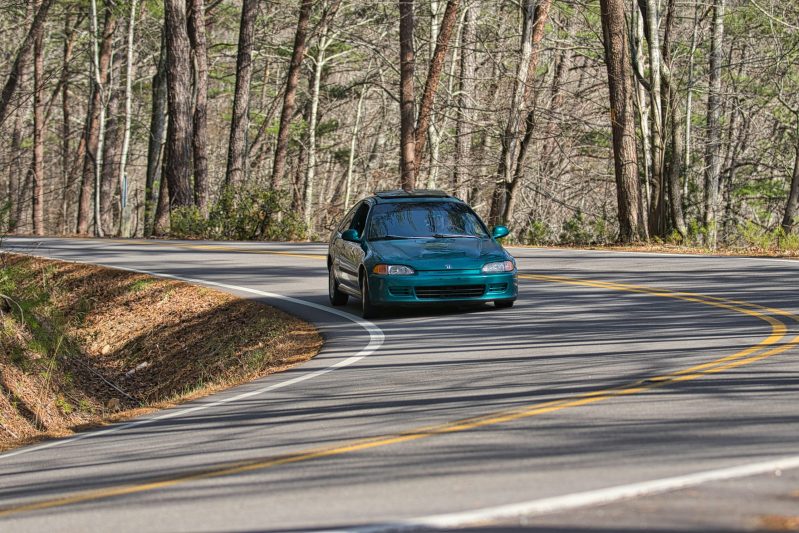
On the morning of April 30, 2026, six Northgate High School students were rushed to hospitals after a violent single-car rollover on Vaughn Road in Newnan, Georgia — a stretch of winding road that has claimed teen lives before. Two of the girls were airlifted in serious condition. The driver, a teen boy behind the wheel of a 2021 Honda Accord, lost control while speeding around a curve. The car left the road, struck a utility pole, and came to rest against a large tree.
The road itself is no stranger to tragedy. A teen died there in 2016. Another died in a single-vehicle crash on the same road in 2023. And now, in 2026, six more young people are recovering from injuries that could have been prevented.
This crash is a stark reminder of what the data has told us for decades: speed, inexperience, and passenger distraction are a deadly combination for teenage drivers — and too many families learn that lesson the hardest way.
What Happened on Vaughn Road
According to the Georgia State Patrol, troopers responded to the crash at approximately 10:40 a.m. on Vaughn Road, north of Brandon Lane in Coweta County. The male student driving the Honda Accord was traveling too fast for the road conditions and failed to negotiate a right-hand curve.
The vehicle left the road, hit a utility pole, and then slammed into a large tree. All six occupants — students at Northgate High School — were transported to hospitals. Two teenage girls were airlifted to nearby medical centers in serious condition. The Coweta County School System was notified by emergency management at 11:15 a.m.
Multiple crash memorials were visible at the scene, including one on the very utility pole the vehicle struck. Vaughn Road has seen a teen fatality in both 2016 and 2023. Community members and safety advocates have long flagged the road as dangerous, particularly for young and inexperienced drivers unfamiliar with how quickly a winding rural road can turn unforgiving at speed.
Teen Driving and Speed: A Persistent Crisis
The Newnan crash is not an anomaly — it is a pattern.
According to the National Safety Council’s Injury Facts, motor vehicle crashes remain the number one cause of preventable death for U.S. teenagers. In 2024, 2,565 teen motor-vehicle occupant deaths were recorded — averaging roughly eight per day. When crashes involving young drivers are counted more broadly, that number rises to 5,247 total fatalities across all ages involved.
Speed is central to the problem. NHTSA data shows that speeding was a factor in 33% of fatal crashes involving teen passenger vehicle drivers ages 15–18 in 2024. Faster speeds reduce the reaction time that inexperienced drivers already lack, while dramatically increasing the severity of any impact that does occur.
The Insurance Institute for Highway Safety (IIHS) reports that the fatal crash rate per mile driven for 16–17-year-olds is approximately three times that of drivers 20 and older. For police-reported crashes of all severities, the rate is nearly four times higher. And critically, risk is highest at age 16 — the earliest point at which most states permit a young person to drive solo.
Winding rural roads compound this risk significantly. These roads offer no margin for error: tight curves, varying road surfaces, and limited visibility punish any lapse in speed management — especially for drivers still building the spatial judgment and hazard perception that only come with experience.
Why Passengers Make Teen Crashes More Likely
One of the most overlooked risk factors in crashes like the one on Vaughn Road is the presence of multiple passengers.
Six teens were in a single vehicle. That alone raises serious red flags from a safety standpoint. NHTSA’s guidance on teen driving is explicit: teen drivers are at significantly greater risk when carrying other passengers. Peer presence can escalate risk-taking behavior, create distraction, and generate social pressure to drive faster or show off — dynamics that are well-documented in teen crash research.
For this reason, many states have enacted Graduated Driver Licensing (GDL) laws that restrict the number of passengers a teen driver may carry during the first year of licensure. Georgia’s GDL law restricts new drivers under 18 from carrying more than one non-family-member passenger under age 21 during the first six months of licensure. Whether those restrictions were a factor in this crash has not been reported, but the presence of six occupants in one vehicle underscores why those laws exist.
Seat Belts, Survival, and What the Numbers Show
Whether all six occupants were wearing seat belts at the time of the crash has not been publicly confirmed. But the data on this point is unambiguous.
According to NHTSA, more than half of passengers killed in cars driven by teen drivers in recent years were not wearing a seat belt. Teens have the lowest seat belt use of any age group. Research consistently shows that seat belts reduce serious crash-related injuries and fatalities by roughly half — meaning a significant portion of teen crash deaths are preventable with a single, no-cost decision.
In a rollover crash — the type that occurred on Vaughn Road — the protective value of a seat belt is even more pronounced. Unbelted occupants in rollovers are at extreme risk of ejection, which is among the most fatal outcomes in any crash scenario.
Road Design and the Danger of “Known Crash Locations”
The fact that Vaughn Road has seen multiple teen fatalities over the past decade raises a separate but equally important question: what responsibility do road engineers, planners, and local government bear for roadways with documented histories of deadly crashes?
Roads like Vaughn Road often share common characteristics — sharp curves, limited guardrails, narrow lanes, insufficient signage, or surface conditions that don’t adequately communicate danger to drivers. When crashes cluster at the same location year after year, that’s not coincidence. It’s a systemic warning.
The Federal Highway Administration (FHWA) maintains resources for identifying and improving High Risk Rural Roads (HRRR). Safety improvements on proven crash corridors — curve warning signs, rumble strips, guardrails, reduced speed limits, and enhanced road markings — have demonstrated effectiveness in reducing crash severity and frequency. Communities that become aware of dangerous road histories should consider raising these concerns through county transportation departments or state DOT channels.
What Families and Survivors Should Know
A crash like this leaves families in shock — and often facing a maze of decisions under the worst possible circumstances. Medical treatment, vehicle damage, school notifications, insurance claims, and potential legal questions can all converge at once.
If your teen was injured as a passenger in someone else’s vehicle, you have rights. Passengers injured in car crashes are generally not at fault for the accident, and Georgia law allows injured parties to pursue compensation for medical expenses, pain and suffering, and other damages. The same applies in cases where a dangerous road condition may have contributed to the crash.
Families in the Atlanta-area region dealing with the aftermath of a serious auto accident should consult with a qualified attorney before accepting any settlement or making statements to insurance companies. Auto injuries in Smyrna, GA and the surrounding metro area are handled by attorneys who understand Georgia’s specific laws around liability, comparative fault, and damages.
How to Talk to Your Teen About Speed and Winding Roads
The best safety outcomes come from ongoing, honest conversations between parents and teens — not a single lecture. Here are concrete points to raise:
Explain why curves are different. On a straight road, a mistake has some recovery time. On a curve, the vehicle’s physics are already working against you. Speed that feels manageable in a straight stretch can make a curve impossible to navigate safely.
Set firm rules about passengers. Agree on how many passengers your teen can carry, and enforce it. Make clear that violating this isn’t about distrust — it’s about documented crash risk.
Establish a no-questions exit. Many teens won’t speak up when a driver is going too fast because they don’t want to seem afraid. Give your teen a standing agreement: they can text you a code word, and you’ll come pick them up — no explanations, no punishment, no questions asked.
Review local roads before they drive them. If your teen drives unfamiliar roads, look at them together on a map. Identify curves, intersections, and speed limit changes in advance.
Model the behavior yourself. NHTSA is explicit that teens who observe their parents following the rules of the road are more likely to do the same. Your habits behind the wheel communicate more than any conversation.
Georgia Teen Driver Safety Resources
Families looking for additional guidance on teen driver safety in Georgia can turn to the following resources:
- Georgia Governor’s Office of Highway Safety (GOHS): gahighwaysafety.org — Teen driving safety campaigns, GDL information, and crash data by county.
- NHTSA Teen Driving Hub: nhtsa.gov/road-safety/teen-driving — Comprehensive resources for parents and teens, including state-specific GDL laws.
- National Safety Council Injury Facts: injuryfacts.nsc.org — Updated annual data on teen crash deaths and contributing factors.
- CDC Teen Drivers Page: cdc.gov/teen-drivers — Evidence-based risk factors and prevention strategies.
- AAA Foundation for Traffic Safety: aaafoundation.org — Research on teen crash risk, naturalistic driving studies, and parent resources.
If your family has been affected by a crash in Georgia, legal guidance is available. Auto injuries in Smyrna, GA and the broader Atlanta metro area can be addressed by attorneys experienced in Georgia personal injury law.
FAQs: Teen Driver Safety and High-Speed Crashes
What is the most common cause of teen car crashes?
Speeding, distraction, and inexperience are the three leading factors. According to NHTSA, speeding contributed to 33% of fatal crashes involving teen drivers in 2024. Inexperience compounds speed risk because teens haven’t yet developed the hazard perception and vehicle control that comes with thousands of hours of driving.
Why are winding roads especially dangerous for teen drivers?
Curves require precise speed management, smooth steering input, and the ability to anticipate the road ahead. Teen drivers, who are still building these skills, have less margin for error. At excessive speed, a curve that looks manageable becomes a loss-of-control situation — exactly what happened on Vaughn Road.
How does having passengers in the car affect teen crash risk?
Research consistently shows that the presence of teen passengers increases crash risk for teen drivers. Passengers can distract the driver, encourage speeding, and create peer pressure to engage in risky behavior. Georgia’s GDL law restricts new teen drivers from carrying more than one non-family passenger under 21 during the first six months of licensure for this reason.
Are seat belts really that important in a rollover crash?
Yes — seat belts are especially critical in rollovers. Unbelted occupants can be ejected from the vehicle, which is one of the most dangerous outcomes in any crash. Seat belts reduce the risk of serious injury and death by approximately half, according to federal crash research.
What should a parent do if their teen was injured as a passenger in a crash?
Seek medical care immediately, document everything, and do not accept any insurance settlement without first consulting a personal injury attorney. Passengers injured in crashes are generally not at fault and may be entitled to compensation for medical bills, pain and suffering, and other losses. In Georgia, consulting an attorney early helps protect your rights before the statute of limitations clock starts running.
Can a dangerous road contribute to a crash legally?
Yes. In certain cases, road design, inadequate signage, or failure to address a known dangerous condition can create legal liability for government entities responsible for road maintenance. An attorney can evaluate whether road conditions played a role in a crash and whether a claim against a government agency is viable.
What is Georgia’s Graduated Driver Licensing (GDL) law?
Georgia’s GDL system requires new drivers under 18 to complete a learner’s permit phase (minimum 12 months, 40 supervised hours), followed by a Class D license phase that restricts nighttime driving and limits non-family passengers under 21. Full licensure is available at age 18. The law exists specifically to reduce crash risk during the highest-risk period of a young person’s driving career.
How can I find out if a specific road has a history of crashes in Georgia?
The Georgia Governor’s Office of Highway Safety publishes crash data by county. You can also review GDOT (Georgia Department of Transportation) reports and local news archives. If you believe a road is persistently dangerous, you can submit a concern through your county transportation department or contact your local state representative.