E-bikes and electric motorcycles have exploded in popularity across the United States — and so have the injuries. What started as a convenient, eco-friendly transportation option has quietly grown into one of the most urgent public safety challenges facing communities from coast to coast. Parents, riders, and local officials alike are grappling with the same hard questions: who’s responsible when a child gets hurt, and what can we do about it?
The numbers are alarming. More than 100 deaths have been attributed to e-bikes and e-motorcycles in the U.S., and in some regions, injuries have spiked by an extraordinary 430% in just four years. That’s not a blip. That’s a crisis — and it demands national attention.
A Warning That Reached a Boiling Point
In Huntington Beach, California, law enforcement took a rare step: they hosted a statewide e-bike safety symposium, bringing together police agencies, medical professionals, educators, policymakers, and community members to search for solutions. The conversation centered on education, legislation, and enforcement — and the challenges were stark.
“We have a lot of officers who really can’t tell the difference between an e-bike and e-motorcycle, so how is a parent going to be able to tell the difference?” asked HBPD Sergeant Mike Thomas at the forum.
That question is not unique to California. Parents and law enforcement in Georgia, Texas, Florida, New York, and every other state with growing e-bike ridership are facing the exact same blind spot. And it matters enormously, because the legal distinctions between an e-bike and an e-motorcycle carry real consequences — for liability, for insurance, and for criminal charges.
Know the Difference: E-Bike vs. E-Motorcycle
This is where many families get into serious trouble. The two vehicles look similar. But legally and mechanically, they are very different — and the rules vary by state.
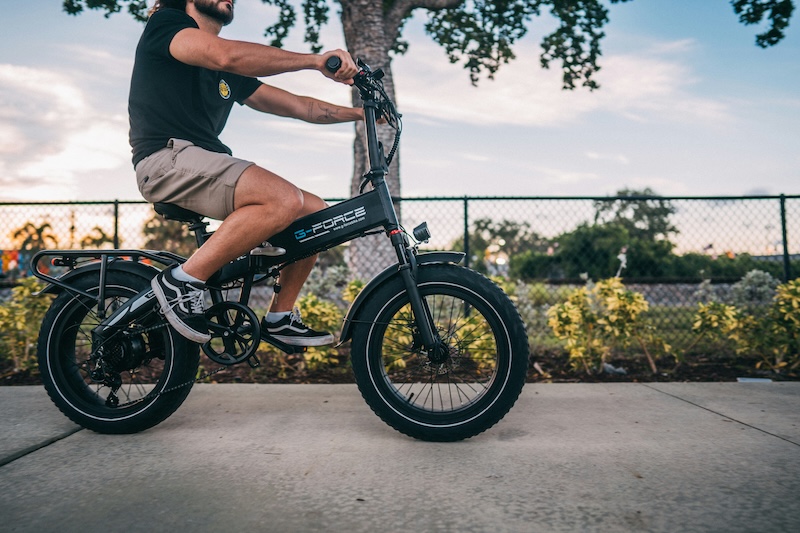
E-Bikes are typically defined as bicycles equipped with an electric motor that provides pedal assistance. Under federal guidelines from the Consumer Product Safety Commission, e-bikes are classified by their top speed and whether the motor assists pedaling or can propel the bike on its own (throttle-only). Most states allow riders of all ages to use Class 1 and Class 2 e-bikes without a license, though some require helmets for minors.
E-Motorcycles, by contrast, are motor vehicles. Many states require a driver’s license or moped permit to operate them, and age restrictions commonly apply. In California, for example, children under 16 are legally prohibited from riding e-motorcycles — yet young riders are doing so in large numbers, often without their parents fully understanding what they’ve purchased.
The National Highway Traffic Safety Administration (NHTSA) has acknowledged the regulatory gaps in this space, noting that the rapid evolution of electric micromobility has outpaced existing legal frameworks in many states. The result is confusion — for riders, for parents, and for police.
Children Are Bearing the Brunt of This Crisis
The data is sobering. Children between the ages of 11 and 14 account for a staggering portion of e-motorcycle crashes nationally. In Southern California alone, this demographic represented more than 61% of e-motorcycle crash victims in recent reporting periods, according to the Orange County District Attorney’s Office.
Jesse Hayes, an e-bike safety advocate who nearly died at 18 in a 2024 crash, spoke at the Huntington Beach symposium about the lasting toll of his injuries. “It took away one of the most important parts of my life, like skateboarding, and I’m not really sure if I’ll be able to do that again,” he said. His story is a sobering reminder that these aren’t just statistics — they’re young people whose lives are permanently altered in a single moment.
Young riders want to ride what their friends ride. Peer pressure is a powerful force, and when the cool thing in the neighborhood is a fast electric vehicle, kids push boundaries. That’s not a California problem. It’s a human problem, and it’s playing out in subdivisions and suburbs everywhere.
Parental Accountability: A Growing Legal Reality
One of the most significant — and sobering — developments in the e-bike safety conversation is the increasing criminal accountability of parents. Law enforcement and prosecutors across the country are beginning to hold parents legally responsible when their children illegally operate e-motorcycles or e-bikes and cause harm.
In California, the Orange County District Attorney’s Office recently announced the formation of a dedicated e-bike and e-motorcycle prosecution unit, specifically created to review criminal charges against both juveniles and adults — including parents who knowingly allowed their children to operate illegal vehicles.
This legal shift matters everywhere. If your child is riding a vehicle that legally qualifies as a moped or motorcycle in your state, and they cause a crash, your family could face civil liability — and potentially criminal exposure. This is true whether you’re in Georgia, Tennessee, Ohio, or anywhere else. Ignorance of what your child is riding is not a legal defense.
The Insurance Institute for Highway Safety (IIHS) has published research documenting the sharp rise in e-bike-related emergency room visits and fatalities, underscoring the need for both education and accountability at the household level.
What Parents and Riders Can Do Right Now
The good news: this is a preventable crisis. Here’s what safety experts and law enforcement recommend:
- Know what you’re buying. Before purchasing an e-bike or e-motorcycle for your child — or yourself — research your state’s legal classification for that specific vehicle. Speed limits, throttle capability, and motor wattage all factor into how the law classifies it.
- Check your state’s age and licensing requirements. Many states prohibit minors from operating certain classes of electric vehicles without a license. The Pedestrian and Bicycle Information Center maintains resources on state-by-state regulations.
- Enforce helmet use — always. The Centers for Disease Control and Prevention (CDC) notes that helmets reduce the risk of serious head injury by up to 85%. For e-bike riders, who travel faster than traditional cyclists, this protection is critical.
- Talk to your kids about speed and roads. E-bikes and e-motorcycles can reach speeds that feel manageable but are genuinely dangerous in mixed pedestrian and vehicle traffic. Young riders often underestimate their stopping distance and reaction time at higher speeds.
- Inspect the vehicle. Some e-bikes sold online have been modified or misrepresented as slower, lower-class vehicles when they’re actually capable of higher speeds. Amazon recently halted sales of certain e-bikes in California that exceeded state speed limits — a sign of how widespread misrepresentation in the marketplace has become.
- Understand your liability. If your child causes injury to another person while riding an e-bike or e-motorcycle, your homeowners or renters insurance may or may not provide coverage depending on how the vehicle is classified. Consult your insurer.
Georgia Families: This Issue Is Closer to Home Than You Think
Georgia has seen a significant rise in e-bike popularity over recent years, particularly in growing communities across the Atlanta metro corridor and beyond. Gwinnett County, Hall County, and the surrounding regions have experienced rapid population growth — and with it, more riders on roads that weren’t necessarily designed with e-bikes in mind.
Georgia law currently classifies electric bicycles under a tiered system similar to many other states, but enforcement and awareness remain inconsistent. Riders and parents in communities across North Georgia should take the time to review Georgia’s e-bike laws and understand what their children are riding before an accident occurs.
When crashes do happen — and unfortunately, they do — families often find themselves overwhelmed and unsure of their legal options. The Buford personal injury lawyers at Davies Hothem Injury Law understand how disorienting this experience can be, and they help injured riders and families in the Buford area understand their rights and pursue the compensation they may be owed.
A Multi-Stakeholder Problem Requires More Than One Solution
UCLA Law Professor Shirin Bakhshay, speaking at the Huntington Beach symposium, put it plainly: “How are we going to get people to prevent their kids from having access to these things? It’s going to take more than the hammer of the criminal law; it’s going to take multiple different stakeholders.”
She’s right. Solving the e-bike safety crisis will require manufacturers to build in speed governors and proper labeling. It will require retailers — online and brick-and-mortar — to accurately represent what they’re selling. It will require schools to add electric mobility to safety curricula. It will require local governments to improve infrastructure. And it will require families to take a more active role in understanding and supervising what their kids are riding.
None of that happens overnight. But the national conversation is starting to shift, and the Huntington Beach forum is an example of what proactive community engagement looks like. Cities and counties across the country would do well to follow that model — before the injury statistics in their own communities demand it.
The Bottom Line
E-bikes aren’t going away. They’re an increasingly important part of how Americans get around — and when used safely and legally, they can be a wonderful thing. But the current gap between the technology’s capabilities and public awareness of its risks is costing people their health, their livelihoods, and in some cases their lives.
Take the time to understand what’s in your garage, what your kids are riding, and what your state’s laws require. The few minutes it takes to look it up could prevent a tragedy that no family is ever prepared for.
For more safety resources, visit the National Safety Council and the Consumer Product Safety Commission.